.svg)


In today's competitive landscape, treating every customer with a generic approach doesn't cut it anymore. Understanding the diverse types of customers in customer service is absolutely essential for business success.
The recent research shows that loyal customers spend 67% more than new customers. The better you communicate with your customers and understand their unique needs, the higher the chance they'll return for your services repeatedly.
Whether you interact with your customer base face-to-face or use customer support outsourcing services, recognizing who you're talking to is the first step toward creating truly positive experiences.
Common Types of Customers Encountered in Service Interactions
Understanding the various customer types you'll encounter is the first step toward providing exceptional service. Each category requires a tailored approach based on their specific needs, behaviors, and expectations.
Let's explore each of these customer types in detail to understand how to serve them best.
1. New Customers
New customers are making their first purchase and still learning about your business. They're receptive to messaging but need more guidance as they explore your products and services for the first time.
How to support new customers effectively:
- Clear onboarding processes: Provide welcome emails, tutorials, and resources that explain how to use your products or services.
- Proactive assistance: Reach out with helpful information before they need to ask questions.
- Personalized welcome: Make them feel appreciated from day one with personalized interactions.
- Accessible support: Ensure your support team is easily reachable through multiple customer service channels.
2. Potential Customers
Potential customers are gathering information but haven't made a purchase. They're evaluating whether your offering meets their needs and might engage through contact forms or newsletter subscriptions while still deciding.
How to guide potential customers toward conversion:
- Exceptional user experience: Ensure your website is easy to navigate, visually appealing, and provides information logically.
- Value demonstration: Clearly showcase the benefits of your product or service through compelling descriptions, case studies, or customer testimonials.
- Simplified experience: Remove obstacles from their customer journey with an intuitive website design and clear information in the sales funnel.
- Readily available support: Offer non-intrusive ways to help, like a visible chat widget or clear contact options for pre-sales questions, staffed by knowledgeable friendly support agents.
3. Loyal Customers
Loyal customers make regular purchases and often become brand advocates. They've established a relationship with your company beyond basic transactions and significantly contribute to revenue — increasing retention by just 5% can boost profits by 25-95%.
How to nurture your loyal customer base:
- Recognition and loyalty programs: Implement loyalty programs that reward customers with exclusive discounts or perks through loyalty programs.
- Personalized communication: Use their purchase history to customize interactions and offers.
- Priority service: Provide dedicated support or faster response times for your best customers.
- Early access: Give them first access to new products or services as a token of appreciation.
4. Confused Customers
This type struggles to understand your offerings or processes. They may feel overwhelmed by options or unclear about next steps, often due to technical complexity or industry jargon, making them likely to abandon their journey without guidance.
How to clarify and guide effectively:
- Simplified explanations: Break down complex information into easily digestible pieces.
- Visual guides: Use images, videos, or demonstrations to enhance understanding.
- Confirmation checks: Verify their understanding before moving forward in the process.
- The right tone of voice: Speak clearly, avoid jargon, and maintain a reassuring demeanor throughout your interactions.
5. Angry/Upset Customers
These have experienced disappointment with your product or service. While challenging, dealing with an unsatisfied customer lets you demonstrate your commitment to quality service, especially since their frustration is often amplified by feeling unheard.
How to transform negative experiences:
- Active listening: Let them express their frustration completely before responding.
- Empathetic approach: Acknowledge their feelings and show genuine concern for their situation.
- Solution-focused response: Offer practical solutions rather than excuses, addressing their concerns in a timely manner.
- Follow-up communication: Check back after resolving the issue to ensure customer satisfaction has been restored.
6. Exploring Customers

This type seeks detailed information before deciding. They value educational content and thoroughly research features, benefits, and processes, often reading extensively and asking specific questions that demonstrate their research.
How to inform and engage curious customers:
- Comprehensive resources: Provide detailed product information, guides, and FAQs.
- Educational content: Offer webinars, demonstrations, and comparison tools.
- Responsive answers: Be prepared to address specific and sometimes complex questions.
- No-pressure approach: Allow them space to explore and learn at their own pace.
7. Deal-Oriented Customers
These are discount seekers. They're highly price-sensitive, often comparing offers meticulously and waiting for sales before purchasing, but can become valuable repeat customers with the right approach.
How to create value for promotion-driven customers:
- Explain the value: Ensure they understand the benefits of your offering even at a discounted price.
- Avoid over-discounting: While discounts attract attention, ensure they don’t diminish the perceived value of your product or brand.
- Reward loyalty: Encourage repeat business with loyalty schemes or exclusive deals for future purchases.
- Provide quality service: Ensure that even at a discount, the quality of the customer service and experience is always top-notch.
8. Impulse Customers

Impulse customers make quick, emotionally-driven decisions. They value convenience and immediate gratification over research, responding well to persuasive marketing, streamlined processes, and triggers like limited-time offers or emotional appeals.
How to satisfy spontaneous shoppers:
- Streamline the checkout process: Make the checkout page simple and intuitive to minimize barriers to purchase.
- Offer immediate gratification: Provide upsell opportunities or related items that complement their initial purchase.
- Encourage quick decisions: Use limited-time offers or promotions to create a sense of urgency.
- Ensure seamless customer experience: Remove any obstacles that may slow down the buying process, like unnecessary forms or pop-ups.
9. Customers Seeking Solutions
These people contact you with a specific need. They value efficiency and directness, expecting representatives to quickly identify and address their requirements without unnecessary elaboration as time is often critical for them.
How to efficiently serve task-oriented customers:
- Be direct: Provide clear, concise information about how your product or service solves their problem.
- Offer self-service: Enable quick resolutions with self-service options, such as FAQs, product guides, and troubleshooting videos.
- Ensure availability: Have good customer service agents readily available to answer any specific questions they may have.
- Provide detailed information: Make sure all the fine print regarding your offering is clearly stated so they don’t feel misled.
10. Lapsed Customers

Inactive customers previously engaged with your business but haven't interacted recently. They represent a significant opportunity since reconnecting with them is typically more cost-effective than acquiring new customers.
How to successfully re-engage past customers:
- Understanding the "why": Analyze available data or conduct brief surveys to understand potential reasons for their departure.
- Targeted re-engagement: Create "we miss you" campaigns with personalized offers or highlight new products/features introduced since their last interaction.
- Addressing past issues: If a specific unresolved issue led to their departure, proactively address it if possible when reaching out.
- Simplified reengagement: Make it easy to restart their customer journey without complications.
11. Active Customers
Active customers regularly interact with your business but haven't yet reached loyal status. They make occasional purchases, engage with your content, and respond to promotions, representing growth potential with the right nurturing.
How to effectively engage active customers:
- Personalized recommendations: Offer suggestions based on their past interactions and purchases.
- Consistent communication: Maintain regular contact without overwhelming them through their preferred channels.
- Feedback opportunities: Create easy ways for them to share opinions about their experiences.
- Incremental incentives: Provide graduated rewards that increase with engagement level to encourage more activity.
12. Customers Who Recommend You
Referring customers are brand advocates. They share their positive experiences through word-of-mouth, social media, or formal referral programs, making them incredibly valuable as they drive new business at minimal cost.
How to maximize referral potential:
- Recognition and thanks: Acknowledge referrals promptly with personalized appreciation.
- Structured programs: Implement formal referral systems with clear incentives for both parties.
- Success stories: Showcase positive testimonials (with permission) to inspire other customers to refer.
- Easy sharing tools: Provide simple ways to share experiences through social media, email templates, or shareable discount codes.
Building a Customer-Centric Approach for All Customer Types
Creating a truly effective service strategy means developing a customer-centric approach that can flex to meet the needs of each customer type. Here's how to build service excellence into your operation:
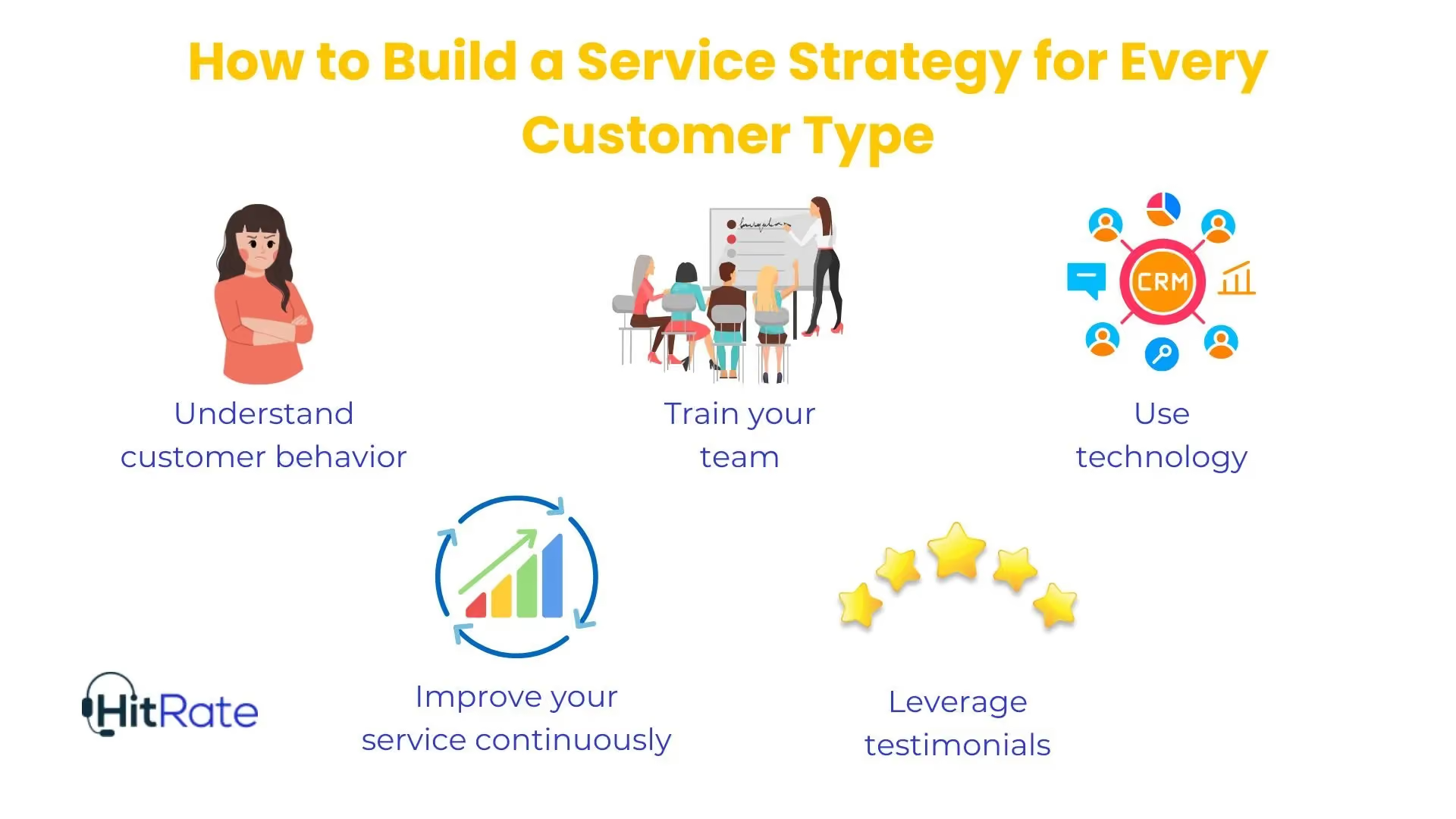
- Understand customer behavior: Analyze your customers' actions to segment them effectively and offer personalized solutions.
- Train your team: Equip your support team with the tools and training they need to handle various customer types with confidence.
- Use technology: Utilize CRM systems effectively to track customer history and preferences, giving agents context for personalized and efficient interactions across all customer service channels.
- Improve continuously: Implement systems to regularly measure customer satisfaction across different segments and use insights to refine your approach continually.
- Leverage testimonials: Use testimonials from satisfied buyers to attract referred customer business through word-of-mouth marketing and demonstrating why your product is worth full price.
By understanding the psychology behind different customer types, you can create service experiences that not only satisfy but also delight your diverse customer base, ensuring higher customer satisfaction.
Elevate Your Customer Service with Hit Rate Solutions
Understanding different customer types helps you build stronger relationships and increase loyalty. Tailoring your approach to each customer's needs drives business growth through both repeat purchases and referrals.
Hit Rate Solutions offers call center services that adapt to all customer types. Our agents are trained to respond effectively to each customer's specific needs. Contact us today to improve your customer service experience.