.svg)


When a business is exploring ways to streamline operations, it may consider outsourcing options like BPO and KPO. Though they might sound similar, these two models serve different purposes, especially in call center environments. What’s the difference?
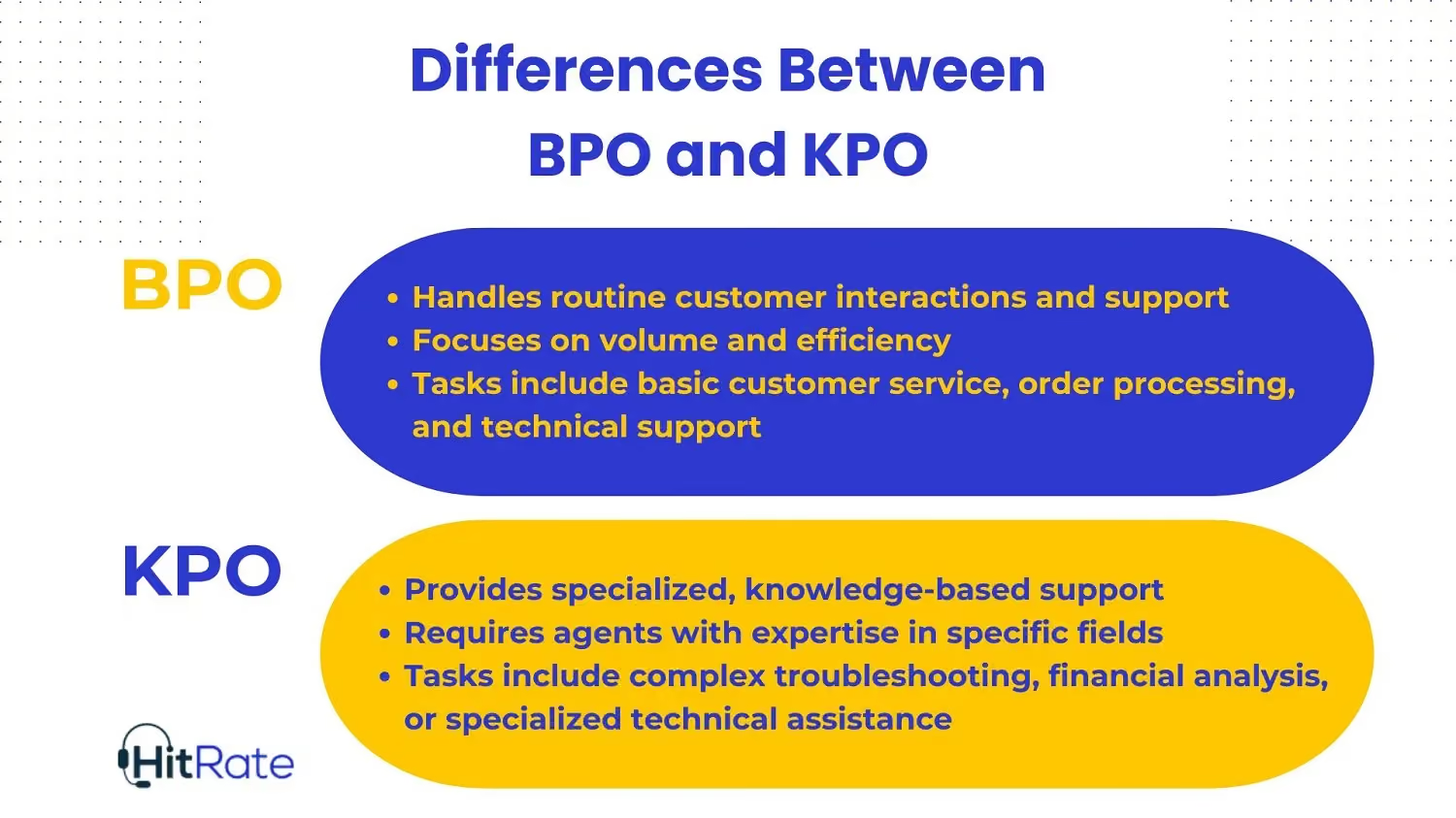
BPO call centers typically handle routine processes following established protocols, while KPO call centers deliver specialized knowledge and analytical insights requiring higher expertise.
Understanding which model fits your needs can significantly impact your operational efficiency and bottom line. The team at Hit Rate Solutions is here to help guide you through this topic so you can choose the best option for your business.
What Does BPO Mean?
Business Process Outsourcing (BPO) involves contracting standard business functions to external service providers who execute these tasks according to predetermined procedures. BPO serves as a strategy for companies to delegate routine operations that, while necessary, aren't part of their core business activities.
Think of BPO as outsourcing the "how" — executing established processes that follow consistent patterns and require moderate skill levels. BPO providers excel at delivering these services efficiently and at scale.
Popular BPO call center services include:
- Customer service and technical support
- Order taking and processing
- Appointment setting
- Lead generation
- Cold calling
- Virtual receptionist services
- Customer feedback collection
- Basic tech support following scripts
- Simple account inquiries and management
In a BPO call center, agents handle both inbound and outbound calls following structured scripts and protocols across various industries. Whether processing insurance claims, scheduling healthcare appointments, qualifying real estate leads, or supporting retail customers, these agents focus on delivering consistent and efficient service through standardized procedures rather than providing specialized knowledge-based insights.
What Does KPO Mean?
On the other hand, Knowledge Process Outsourcing (KPO) is an outsourcing model focusing on information-intensive activities requiring specialized expertise, analytical skills, and domain knowledge. Unlike BPO's focus on executing predefined processes, KPO involves outsourcing work that requires judgment, interpretation, and specialized insights.
KPO deals with the "why" and "what" rather than just the "how", often employing professionals with advanced degrees who can analyze complex situations and provide high-value recommendations. Instead of simply following procedures, these specialists contribute intellectual capital.
Common KPO call center services include:
- Technical troubleshooting requiring engineering knowledge
- Financial advisory services and consultation
- Healthcare information services with medical expertise
- Legal information services and preliminary case assessment
- Advanced product support requiring specialized knowledge
- Market research interview coordination and analysis
- Specialized customer insights and analytics reporting
- Processing of complex claims requiring industry knowledge
- Regulatory compliance support and guidance
BPO vs. KPO: Key Differences
Understanding the distinctions between these models helps clarify which approach best suits your needs:
Types of BPO Services
The BPO industry generally categorizes services based on geographic relationship:
- Domestic BPO: Companies outsource processes to providers within their country, minimizing cultural and communication barriers, but typically more expensive than other options.
- Regional BPO: This involves partnering with service providers in neighboring countries, offering a balance between cultural alignment and cost efficiency with minimal time zone differences.
- International BPO: Businesses contract with providers in distant countries with substantially lower operational costs.
Types of KPO Services
The KPO industry encompasses several specialized categories:
- Data analytics KPO: These providers transform complex datasets into actionable business intelligence using advanced analytical capabilities, helping organizations make data-driven decisions.
- Market research KPO: Specialists conduct sophisticated market analysis, consumer behavior studies, and competitive landscape assessments to inform strategic business decisions.
- Financial KPO: These providers deliver specialized financial modeling, investment analysis, risk assessment, and other complex financial services needing deep domain expertise.
- Legal KPO: Legal professionals offer specialized legal research, contract analysis, intellectual property management, and other knowledge-intensive legal support services.
- Healthcare KPO: Specialists provide advanced medical coding, clinical data analysis, pharmaceutical research support, and other healthcare-specific knowledge services.
Advantages of BPO

Organizations turn to BPO for several compelling advantages, such as:
- Significant cost savings: Companies can dramatically cut operational costs by leveraging labor markets with lower wages and reducing infrastructure investments.
- Enhanced focus on core competencies: Delegating routine processes allows internal teams to concentrate on activities that generate revenue and competitive advantage.
- Operational scalability: BPO enables businesses to expand or contract operations quickly based on demand fluctuations without the constraints of hiring or layoffs.
- Access to specialized tools: Many BPO providers invest in advanced technology platforms that clients can leverage without capital expenditure.
- Extended service hours: Global BPO partners can provide round-the-clock customer service coverage through different time zones.
Considerations When Implementing BPO
Despite its advantages, BPO implementation has its challenges. For example, maintaining consistent service quality across different locations requires effective quality assurance systems. Also, integrating outsourced operations with existing company infrastructure often demands technical adjustments. However, with a dedicated BPO provider, the process is easy.
Advantages of KPO

Organizations leverage KPO for several strategic advantages, including:
- Specialized knowledge access: KPO provides immediate access to niche expertise that would be difficult and expensive to develop internally.
- Intellectual capital augmentation: Rather than simply executing tasks, KPO providers contribute intellectual value that enhances organizational capabilities.
- Flexibility in specialized staffing: Companies can access specialized talent for specific projects without maintaining expensive in-house experts during slower periods.
- Accelerated innovation: KPO partners can provide specialized research and development support that speeds up innovation cycles and reduces time-to-market.
- Global expertise: Organizations can tap into specialized knowledge centers worldwide, accessing regional expertise where it's most developed.
Considerations When Implementing KPO
However, the specialized nature of KPO creates unique implementation challenges to consider.
- Expertise verification difficulties: Assessing the quality and depth of specialized knowledge in potential providers requires sophisticated evaluation methodologies.
- Complex knowledge transfer: Transferring specialized knowledge between client and provider is more difficult than process-oriented transitions, often requiring extensive collaboration.
- Intellectual property vulnerabilities: The high-value nature of KPO work creates elevated risks around proprietary information protection and potential competitive exposure.
- Communication complexity: Conveying nuanced requirements and feedback about knowledge-intensive work requires sophisticated communication frameworks.
- Quality measurement challenges: Unlike process-based BPO, measuring quality in knowledge work requires more subjective assessment and specialized evaluation criteria.
- Higher management bandwidth: KPO relationships usually demand more strategic oversight and deeper collaboration than process-focused BPO arrangements.
KPO vs. BPO: Which Is Better for Your Business?

We know you may still feel overwhelmed about the decision, but let’s simplify it. To make the optimal choice, do the following:
- Analyze your business objectives: Are you primarily seeking operational efficiency or specialized capabilities that enhance competitive advantage?
- Assess your knowledge requirements: Do customer interactions involve routine transactions or complex issues requiring specialized expertise?
- Evaluate your budgetary framework: Consider the direct cost comparison and the potential value creation from specialized knowledge versus process efficiency.
- Consider your competitive positioning: BPO excels at operational optimization, while KPO can deliver distinctive capabilities that differentiate your customer experience.
- Review your internal capabilities: Identify genuine knowledge gaps where external expertise would complement your organization's strengths.
Transform Your Customer Experience with Hit Rate Solutions
Our inbound and outbound call center specializes in delivering customized BPO services for businesses in the United States, Canada, and Australia. Our approach balances efficiency with quality, ensuring your customers receive exceptional service while you focus on core business priorities. When you work with us, you can expect affordability, quality, and hands-on help to guide your business toward success.
Contact us today to discover how our flexible, affordable call center solutions can transform customer interactions and drive measurable business results.