.svg)


A medical answering service is a specialized call center that handles phone communications for healthcare providers. These services manage incoming calls, schedule appointments, relay messages, and provide critical support to medical practices.
The global medical answering service market continues to grow as healthcare providers see the value of professional call handling. These services help reduce wait times, manage call volume effectively, and improve patient satisfaction, all while helping medical professionals dedicate more attention to patient care.
For healthcare organizations struggling with high call volumes or after-hours coverage, a medical answering service like Hit Rate Solutions is the ideal solution to efficiently manage patient communications while allowing medical staff to focus on providing quality care.
Types of Healthcare Phone Answering Services
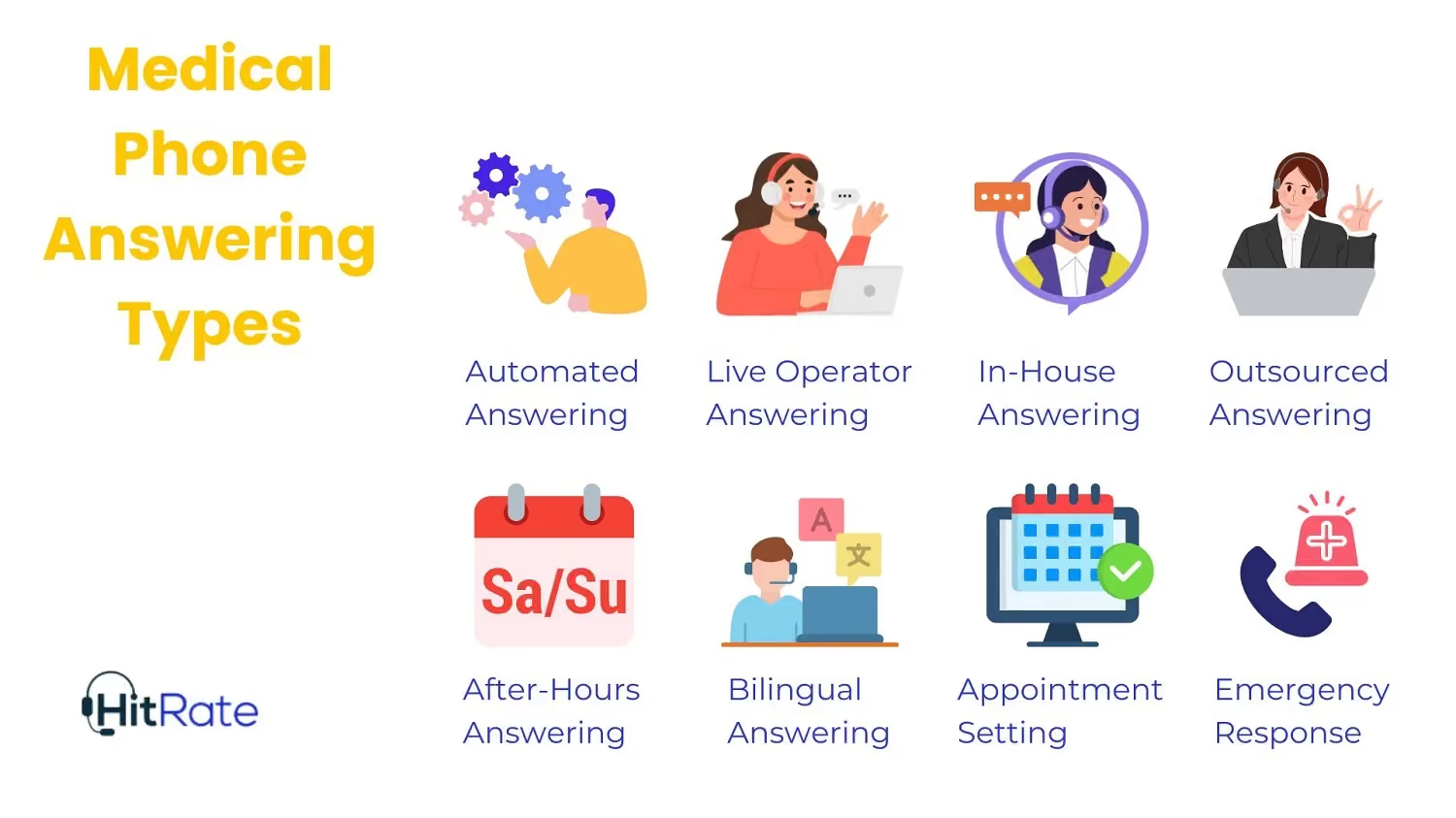
Medical answering services come in various forms that address the specific needs of healthcare organizations. From automated systems to live operators, these solutions enhance communication efficiency and patient satisfaction. Here are some examples of answering services.
1. Automated Call Handling
Automated answering services use pre-recorded messages and interactive voice response systems to handle basic patient inquiries. These systems operate 24/7, providing a cost-effective solution for handling routine tasks like appointment confirmations and prescription refill requests. While they don’t have the same level of personal touch as a human operator, automated services can manage high call volumes and perform repetitive tasks efficiently.
2. Human-Powered Answering
Live operator services use trained professionals who answer calls on behalf of medical practices. These operators provide personalized attention, can handle complex inquiries, and manage emergencies appropriately. The human touch offered by live operators creates a more comforting experience for patients, especially those who may be distressed or have urgent medical concerns.
3. Medical Office Answering Service

Some healthcare organizations maintain their own in-house answering teams. This gives them complete control over operations and ensures staff are thoroughly trained on specific protocols. While in-house services integrate seamlessly with office workflows, they require significant investment in staffing and infrastructure.
4. Outsourced Healthcare Phone Answering
Outsourced services, like our team at Hit Rate Solutions provides, allow medical practices to contract with specialized third-party providers. These services offer professional expertise, scalability based on call volume, and potential cost savings compared to maintaining in-house staff. Also, by efficiently managing patient communication and broadening reach, these services can help with healthcare market expansion.
5. Extended Hours Call Support
After-hours services handle calls when the medical office is closed to help patients reach someone during evenings, weekends, and holidays. These services provide peace of mind for both patients and practitioners, maintaining continuity of care and addressing urgent concerns that may develop outside regular business hours.
6. Bi-/Multilingual Answering Services

These services cater to diverse patient populations by offering support in multiple languages. For practices serving multilingual communities, these services improve communication with non-English speaking patients, enhancing care accessibility and patient satisfaction by removing language barriers.
7. Appointment Setting Services
Healthcare appointment scheduling services focus on managing the healthcare practice's calendar efficiently. They handle booking, rescheduling, and cancellations while sending appointment reminders to reduce no-show rates. Many integrate with electronic health record systems to ensure there’s seamless coordination with the practice's workflow.
8. Emergency Response
Emergency dispatch services provide rapid triage for urgent calls to help determine the appropriate responses and contact on-call physicians when necessary. These services follow established protocols to assess emergencies, coordinate with on-call medical staff, and ensure that critical patients receive immediate attention.
How Does a Medical Answering Service Work?

Medical answering services perform numerous tasks that support healthcare operations and enhance the overall patient experience. The scope of services depends on the provider but typically includes several core functions to help keep medical practices running smoothly. We’ve listed some common medical answering services below.
24/7 Call Reception and Message Delivery
The fundamental role of medical answering services involves receiving patient calls around the clock and ensuring each caller receives the attention they deserve. Operators take detailed messages and relay them to the right medical staff based on urgency. For critical situations, they follow established protocols to connect patients with on-call providers as quickly as possible.
Scheduling and Appointment Reminders
Answering services streamline the scheduling process by booking, rescheduling, and canceling appointments based on the practice's availability. They also send automated reminders to patients about upcoming appointments, significantly reducing no-show rates and helping maintain an efficient schedule for healthcare providers.
Responding to Patient Questions

Answering service operators respond to common patient questions regarding office hours, directions, prescription status, and general medical information. They offer basic guidance while appropriately escalating complex medical questions to qualified healthcare professionals. As a result, physicians aren't overwhelmed with routine inquiries.
Tailored Call Protocols
Medical practices can establish specific protocols for how their calls should be handled. Answering services implement these custom scripts and workflows to establish consistent patient experiences that align with the practice's brand and values. These services also integrate with existing practice management and scheduling systems for a seamless exchange of information.
Extending Call Support
During peak call times, answering services help manage excess call volume that the in-house staff cannot handle efficiently. This prevents long hold times and reduces call abandonment. Similarly, after-hours coverage ensures patients get help even when the office is closed to help maintain continuous patient care.
Medical Assessment and Guidance

Some advanced answering services employ registered nurses who can assess symptoms and provide basic guidance according to established medical protocols. These nurses determine how urgent the medical issue is and direct patients to appropriate care levels, from self-care recommendations to emergency room referrals.
Other Tasks
Medical answering services often handle additional administrative functions, including physician referrals, prescription refill coordination, insurance verification, and patient satisfaction surveys. They may also help with billing inquiries so that patients understand their financial responsibilities and payment options.
Signs Your Healthcare Practice Needs Call Support
You might not feel confident if your healthcare practice needs call support. Generally speaking, you should consider a medical answering service when patient call management becomes challenging. Here's when it might be time to explore these services:
- Call overload: When call volume overwhelms staff, causing long waits and missed calls, answering services provide a safety net and after-hours support.
- Appointment gaps: High no-show rates prompt the need for automated or live reminder calls. Overburdened staff can offload phone duties to focus on in-person patients.
- Bi-/multilingual support needs: Multilingual services ensure equal access for diverse populations. Specialized services also enhance patient privacy during phone interactions.
- Budget-friendly support: Answering services offer a cost-effective alternative to hiring, which reduces expenses while improving patient satisfaction.
Benefits of a Medical Answering Service
Medical answering services offer substantial advantages for healthcare providers, from operational improvements to enhanced patient care. These benefits extend throughout the practice and impact both clinical and administrative aspects.
Seamless Patient Contact
Implementing an answering service dramatically improves patient communication by ensuring calls are answered promptly and professionally. This reduces frustration from unanswered calls and provides patients with immediate acknowledgment of their needs, even during busy periods or after hours.
Streamlined Practice Workflow
When there aren’t constant phone interruptions, healthcare professionals experience enhanced operational efficiency. Clinical staff can focus on in-person patient care rather than juggling calls between appointments, improving both concentration and productivity. Administrative staff gain valuable time for completing essential office tasks without frequent disruptions.
Around-the-Clock Call Management

The 24/7 availability that answering services offer creates invaluable peace of mind for both patients and providers. Patients appreciate knowing they can reach assistance regardless of time, while practitioners benefit from knowing urgent matters will be appropriately triaged and escalated when needed.
Financial and Operational Gains
From a business perspective, answering services help reduce missed appointments through systematic reminders, directly impacting practice revenue. These services are cost-effective compared to hiring additional full-time staff, especially for handling after-hours calls or managing peak-time overflow.
Flexible Call Volume Management
The scalability of answering services allows practices to adjust support levels as needs change, whether during seasonal fluctuations or practice growth periods. This flexibility eliminates the challenge of staffing for variable call volumes while maintaining consistent service quality.
Inclusive Bi-/Multilingual Services
For multilingual patient populations, specialized answering services bridge language barriers to ensure that all patients receive equal access to care regardless of their primary language. This inclusivity improves both patient satisfaction and healthcare outcomes by facilitating clearer communication.
Urgent Care Call Handling
Finally, the emergency response capabilities of medical answering services enhance patient safety through prompt identification and management of urgent situations. Any critical cases receive immediate attention according to the established protocols.
Medical Answering Services: Overcoming Potential Obstacles
While medical answering services offer numerous benefits, healthcare organizations may encounter certain challenges and pain points during implementation and ongoing operations. To ensure a successful partnership, it’s important to understand these potential issues:
Considerations When Choosing a Healthcare Answering Service
Choosing the right medical answering service is a big decision that can significantly impact your business. You need to make sure it's a good fit for how your practice works and the level of care you want to provide. Here's what to check out when weighing your options:
- Healthcare call center expertise: Look for answering services with solid medical call center experience. The best providers work with your scripts seamlessly, can identify urgent situations, and have worked successfully with practices like yours.
- Service options: Review available services and match them to your needs. Consider whether you need simple message-taking, full appointment scheduling, clinical call screening, or all three. Choose a provider that offers tailored solutions that specifically address your practice's challenges.
- Technology compatibility: Assess how smoothly the service connects with your current systems. Good integration with your patient records, scheduling software, and practice management tools prevents information gaps and redundant work.
- Dependable coverage: Prioritize reliability in your selection process. Your answering service must deliver consistent support without call drops or delays. To ensure reliability, ask for performance statistics and information about their backup systems that maintain service during technical problems or unexpected call surges.
- Staff qualifications: Review how the service trains its representatives. Ongoing quality checks and continuing education demonstrate the provider's commitment to excellence.
- Transparent pricing & flexibility: When considering cost, look for a service that offers both value and transparency. For inbound services, Hit Rate Solutions offers a customizable $7/hr package. Our flexibility allows you to tailor the service to your needs and budget. We're happy to discuss your needs and find the most cost-effective solution for your practice.
How Much Does a Healthcare Answering Service Cost?

Medical answering service costs typically vary. Providers can charge per call or per hour, or have a fixed rate. You can expect to pay roughly $0.75 to $1.40 per call, with the price often determined by call duration measured in seconds. Shorter calls might cost less than $0.75. If predictable budgeting is important to your practice, consider monthly packages or subscriptions.
Choose High-Quality Outsourced Medical Answering Services from Hit Rate Solutions!
Ready to experience the difference that exceptional patient communication can make for your practice? Hit Rate Solutions is your trusted partner in delivering outstanding service and optimizing your operations. Our core team has been together for over a decade, and we know what it takes to excel in the medical field. We go beyond simply answering calls — we become an extension of your team, ensuring every patient interaction reflects your commitment to care.
Contact us today to explore how our healthcare call center can elevate your patient experience, streamline your workflow, and free your staff to focus on what matters most: providing exceptional medical care.