.svg)


In today's complex healthcare landscape, call centers are the vital first point of contact between patients and providers. A healthcare call center can handle everything from appointment scheduling to cold calling and insurance inquiries.
With increasing patient expectations and evolving healthcare regulations, these centers can face challenges impacting operational efficiency and patient satisfaction.
Join the Hit Rate Solutions team as we explore the most common challenges and practical solutions to overcome them.
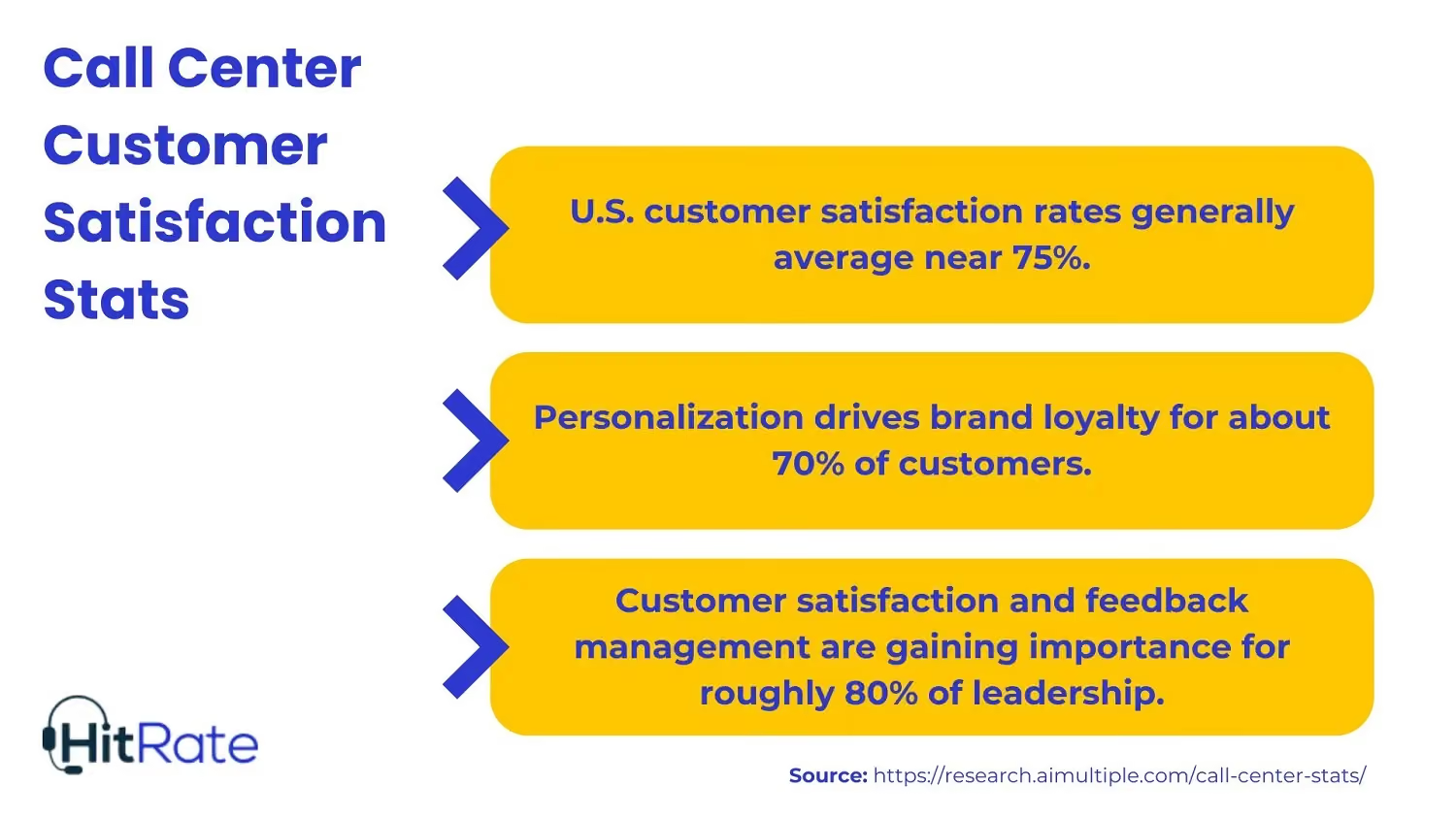
1. Tackling High Call Volumes Without Sacrificing Service Quality
High call volumes represent one of the most persistent challenges for healthcare call centers, especially during seasonal illness spikes, public health emergencies, or insurance changes. With most healthcare appointments still scheduled by phone, many centers struggle to manage the influx while maintaining service quality.
It might not seem like a big deal, but the repercussions can be widespread. The consequences of unmanaged high call volumes are significant: extended hold times frustrate patients, while overworked agents experience burnout, potentially leading to errors or increased turnover. According to research, there’s a direct correlation between shorter wait times and improved patient satisfaction scores.
Effective solutions include:
- Implementing intelligent call routing systems that direct inquiries to appropriately skilled agents.
- Using queue management tools with callback options to reduce patient frustration.
- Offering alternative communication channels, like secure messaging or online scheduling.
- Using workforce management software to predict call spikes and adjust staffing accordingly.
2. Delivering Precise and Prompt Patient Information

Healthcare communication requires exceptional accuracy, whether explaining insurance coverage, scheduling appointments with specialists, or conveying test results. The complexity of modern healthcare systems means agents must navigate a labyrinth of policies, medical terminology, and provider schedules while maintaining clear communication.
The average handling time for healthcare calls typically exceeds 3 minutes (excluding post-call documentation), significantly longer than in many other industries. This extended duration stems from the need to verify patient identities, access records, and address multi-faceted health concerns.
Centers prioritizing accuracy and timeliness build patient trust while optimizing operational metrics like first-call resolution rates.
Here are some tips to improve accuracy and efficiency:
- Integrate call center platforms with electronic health records and patient management systems.
- Develop comprehensive knowledge bases for common inquiries.
- Create scripted responses for complex but frequent scenarios.
- Establish clear escalation pathways for clinical questions requiring provider input.
3. Addressing Complex Healthcare Inquiries Effectively
Healthcare call center agents regularly field questions spanning domains such as medical, insurance, administrative, and technical. These complex inquiries require specialized knowledge and often involve multiple systems or stakeholders to resolve completely.
The challenge intensifies when patients call with urgent concerns or emotional distress. This requires agents to demonstrate technical expertise and empathetic communication skills. This means that centers must prepare staff to handle everything from billing discrepancies to questions about medication side effects.
Here are some successful approaches:
- Developing specialized agent teams with expertise in specific areas (billing, clinical scheduling, insurance verification).
- Creating comprehensive decision trees for common complex inquiries.
- Implementing robust documentation systems to track multistep resolutions.
- Providing agents with access to clinical resources when appropriate.
4. Bridging the Gaps Between Multiple Healthcare Providers
Today's fragmented healthcare ecosystem requires call centers to coordinate communication between primary care physicians, specialists, testing facilities, insurance companies, and pharmacies. While it seems feasible, there are still challenges, such as when patients receive care across multiple health systems with incompatible electronic health records.
Call centers must navigate varied communication preferences (fax, phone, secure messaging) while ensuring all information transfers are complete and accurate. In the case that coordination fails, patients experience delayed care, redundant testing, or coverage denials, all of which are frustrating.
Effective coordination strategies include:
- Implementing healthcare-specific CRM systems that track patient interactions across providers.
- Establishing standardized communication protocols with partner organizations.
- Creating dedicated coordination teams for complex cases.
- Using secure digital platforms to consolidate patient information from disparate sources.
5. Building Stronger Teams Through Better Training and Teamwork

Healthcare call centers face exceptional challenges in staff development and retention. With industry turnover rates at 30-45% annually, centers constantly balance onboarding new hires while maintaining service standards. This drains resources quickly and can impact employee morale.
The specialized knowledge required of healthcare call center agents — things like medical terminology, insurance, and compliance — makes their jobs particularly challenging. This, combined with high levels of agent burnout, means healthcare centers must prioritize skill development and improving job satisfaction.
Effective approaches include:
- Creating structured career advancement pathways for agents.
- Implementing continuous education programs on healthcare topics.
- Facilitating collaboration between call center staff and clinical teams.
- Recognizing performance through meaningful metrics beyond call volume.
6. Upgrading Technology to Boost Patient Experience
Outdated technology is a problem for countless businesses, but especially call centers. It remains a significant barrier for many healthcare call centers. For example, legacy systems often lack integration capabilities, omnichannel support, and analytics for modern healthcare communication.
Technical limitations affect every aspect of call center performance — from call quality and routing to security compliance and performance tracking. Without real-time analytics, centers struggle to identify bottlenecks or optimize agent performance.
Successful technology strategies to stay up-to-date include:
- Migrating to cloud-based platforms with healthcare-specific features.
- Implementing AI-driven solutions for routine inquiries and triage.
- Ensuring compliant recording and data management.
- Using interactive dashboards for performance monitoring.
Partner with Hit Rate Solutions for Efficient Healthcare Call Center Services

Despite these challenges, your organization can still find ways to overcome them. Hit Rate Solutions helps organizations overcome these widespread challenges through customized medical call center outsourcing services. We strive to provide a better customer experience tailored to the needs of medical and healthcare organizations.
By partnering with Hit Rate Solutions, healthcare organizations can reduce operational costs while improving patient satisfaction through shorter wait times, more accurate information, and compassionate service.
Our specialized healthcare call center agents receive thorough training in technical systems and patient communication, allowing them to handle complex inquiries with empathy and precision. We implement custom workflows that integrate with your existing healthcare management systems, creating seamless experiences for patients and providers.
Don't let call center challenges compromise your patient experience or operational efficiency. Contact our USA call center today to discover how our solutions can transform patient communication and reduce the administrative burden on your internal teams.