.svg)


When done right, customer support can be the make-or-break factor for your business success. But should you approach B2B and B2C customers the same way? Not exactly.
Trying to use the same customer support approach for everyone is like wearing flip-flops to a snowstorm. It just doesn't work.
Whether it's appointment setting services, cold calling campaigns, or lead generation solutions, it's crucial to understand the fundamental differences between supporting business clients and individual consumers.
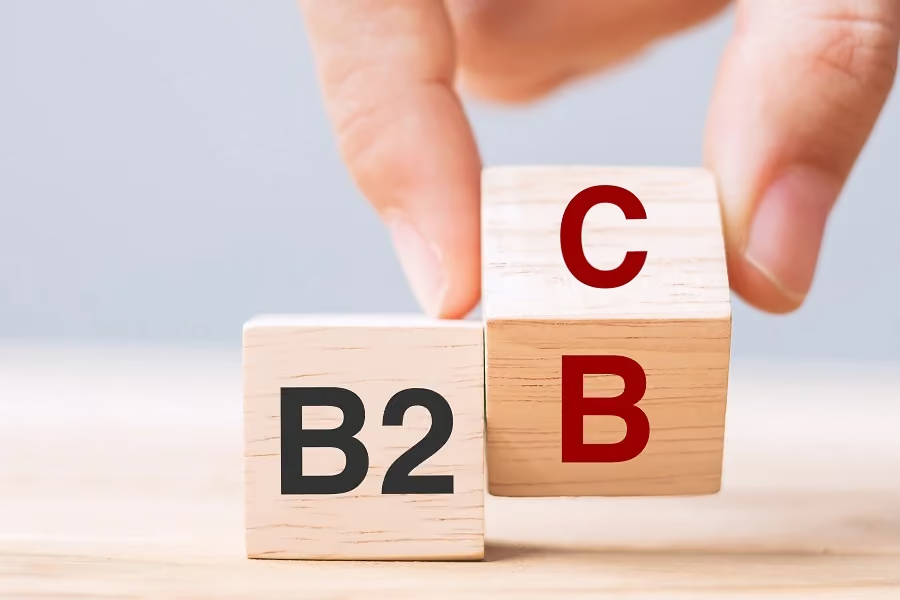
B2B (business-to-business) and B2C (business-to-consumer) companies operate in completely different worlds. Their customers have different expectations, face different challenges, and evaluate success differently.
So — let’s look at the differences:
1. Financial Impact: The Stakes Are Different
The most obvious difference between B2B and B2C customer support? Money talks.
B2B relationships typically involve larger purchase values and longer contracts. When a business signs up for your virtual assistance services or phone answering support, they're making a significant investment with serious financial implications.
Think about it — a B2B client might spend thousands of dollars monthly on your services, while a B2C customer might make a one-time purchase of much less.
This means:
- B2B customer interactions have a much higher impact on your revenue.
- Losing a B2B client can cost you millions in potential lifetime value.
- B2B relationships require more personalized attention and ongoing support.
That's not to say B2C customers don't matter — they absolutely do! But the financial stakes and relationship dynamics are simply different.
2. Decision-Making Process: Solo vs. Committee
When selling to consumers, you're typically dealing with one person making a relatively quick decision. They see something they like, they buy it.
In the B2B world? Get ready for multiple stakeholders, complex purchasing decisions, and a drawn-out buying process. Your customer support needs to account for this difference.
For B2B support:
- You'll interact with different individuals from the same company.
- Each person might have different questions or concerns.
- You need to track communications across an entire organization.
- The sales cycle is longer, giving you more time to build relationships.
For B2C support:
- Individual customers want quick resolutions
- They typically have straightforward questions
- Interactions are usually one-and-done
- The repeat purchase rate is generally lower
This is why B2B customer relationship management often requires dedicated account managers, while B2C can function well with a more generalized support team.
3. Technical Complexity: Simple vs. Specialized
B2C customer issues tend to be straightforward — questions about returns, product features, or account access. These can often be resolved through self-service options or brief support interactions.
B2B support queries? They're typically more complex beasts requiring specialized knowledge and technical expertise. When a business client reaches out about their lead generation campaign or virtual receptionist service, they expect detailed, nuanced responses from someone who truly understands their business needs.
This complexity difference means:
- B2B support agents need deeper product knowledge and industry expertise.
- B2C support can often be effectively handled through knowledge bases and FAQs.
- B2B issues generally take longer to resolve.
- B2C customers value speed over depth.
The best support teams recognize this difference and staff accordingly, with specialized agents for B2B accounts and more generalist (but still well-trained) staff for consumer support.
4. Communication Channels: Traditional vs. Omnichannel
How customers prefer to reach out for support varies dramatically between business and consumer markets.
B2C customers are increasingly gravitating toward:
- Social media channels for quick responses
- Mobile-friendly support options
- Self-service knowledge bases
- Live chat for real-time assistance
- Text and messaging apps
These channels reflect the on-the-go nature of consumer support. Modern consumers want to resolve issues while waiting in line for coffee or during their lunch break.
B2B clients, however, often prefer:
- Email support (still viewed as more official and documentable)
- Dedicated phone lines with assigned representatives
- Video conferencing for complex issues
- Integrated support platforms that connect with their existing systems
- Regular scheduled check-ins and reviews
B2B clients often prefer communication channels that create paper trails, foster deeper discussions, and maintain professional boundaries.
5. Resolution Speed: Quick Fixes vs. Comprehensive Solutions
B2C and B2B customers have completely different expectations when it comes to timing.
.avif)
Consumers want lightning-fast responses — waiting 15 minutes while trying to order dinner or book a flight feels like forever. They prioritize speed over everything else.
Business clients care more about thoroughness than quickness. They'd rather wait a bit longer for a complete solution than get a fast but inadequate fix that requires multiple follow-ups.
This fundamental difference means B2C teams should optimize for rapid resolution and efficiency, while B2B teams need to focus on problem-solving depth and relationship building. For consumers, satisfaction means frictionless experiences. For business clients, it's about partnership and expertise.
6. Social Presence: Casual Engagement vs. Professional Authority
The social media approach for B2B and B2C support couldn't be more different, yet both are increasingly important in today's connected world.
B2C customers live on social platforms. They'll tag brands in complaints, share screenshots of bad experiences, and publicly praise great service. These customers expect immediate responses through platforms like Twitter, Instagram, and Facebook. For consumer-focused companies, social support isn't optional — it's essential.
When handling B2C social support:
- Response time should be measured in minutes, not hours
- Tone can be casual and friendly
- Issues should be resolved in-channel when possible
- Public conversations can showcase your customer-first approach
B2B social support serves a different purpose. While business clients rarely air grievances on LinkedIn, they do use social platforms to evaluate your expertise and authority.
Your B2B social presence should focus on:
- Thought leadership content that demonstrates industry knowledge
- Professional responses to all engagements
- Directing complex support needs to appropriate private channels
- Building credibility through consistent, valuable interactions
Both approaches require dedicated monitoring and strategic planning, but the goals and execution differ dramatically based on the audience you're serving.
Tailoring Your Customer Support Strategy for Success
.avif)
So, how do you build a customer service strategy that accounts for these differences while delivering excellent experiences for all?
For B2C support, focus on:
- Quick resolution times
- Friendly, approachable communication
- Efficient self-service options
- Omnichannel support (especially social media)Simple, streamlined processes
For B2B support, prioritize:
- Dedicated account management
- Deeper product and industry knowledge
- Proactive communication and consultation
- Customized solutions for unique problems
- Building trust and demonstrating expertise
B2B vs. B2C Customer Service: Know Your Audience
The secret to great customer service isn't treating everyone the same — it's understanding the unique characteristics of your audience and adapting your approach accordingly.
Whether you're interacting with businesses or consumers, the fundamental goal remains the same: solve problems, build trust, and create positive experiences. But how you get there should vary based on who you're serving.
Developing strategies that resonate with the different expectations, needs, and behaviors of B2B and B2C customers, you get higher customer satisfaction, better retention, and ultimately, a stronger bottom line.
Ready to transform your customer support? Let Hit Rate Solutions handle it. We offer specialized B2B and B2C customer service, providing the perfect blend of speed, personalization, and expertise. From appointment setting to virtual assistance, we deliver the support your customers expect — contact us now!